08 March 2026
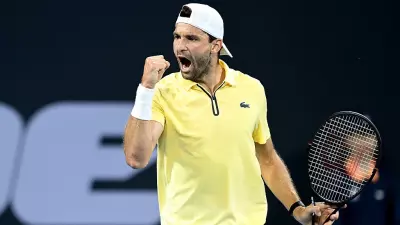
Professional tennis often moves quickly, with younger players rising and veterans fighting to stay relevant. In that setting, the career of Grigor Dimitrov stands as an example of skill-focused competition rather than power-driven dominance.
Since turning professional in 2008, he has built a reputation as a technically gifted player who relies on timing, court awareness, and tactical patience.
His style is sometimes compared to Roger Federer, although Dimitrov has developed a distinct career path shaped by his own strengths and challenges.
The story surrounding Dimitrov today is less about early career breakthroughs and more about endurance.
After dealing with injury setbacks in 2025, his focus has shifted toward recovery, consistency, and rebuilding competitive rhythm across the 2026 ATP season.
Born in Bulgaria, he grew up training in a tennis environment that emphasized skill development and tactical awareness rather than raw physical dominance.
As a junior player, Dimitrov quickly gained international attention by winning major youth championships at the Wimbledon Championships and the US Open. These victories signaled his potential to transition into professional competition.
Dimitrov turned professional in 2008. Early in his career, analysts compared parts of his technique and movement style to legendary all-court players.
One frequently mentioned stylistic influence is Roger Federer, particularly in shot fluidity and backhand execution.
However, Dimitrov developed his own identity, blending defensive stability with sudden offensive acceleration during rallies.
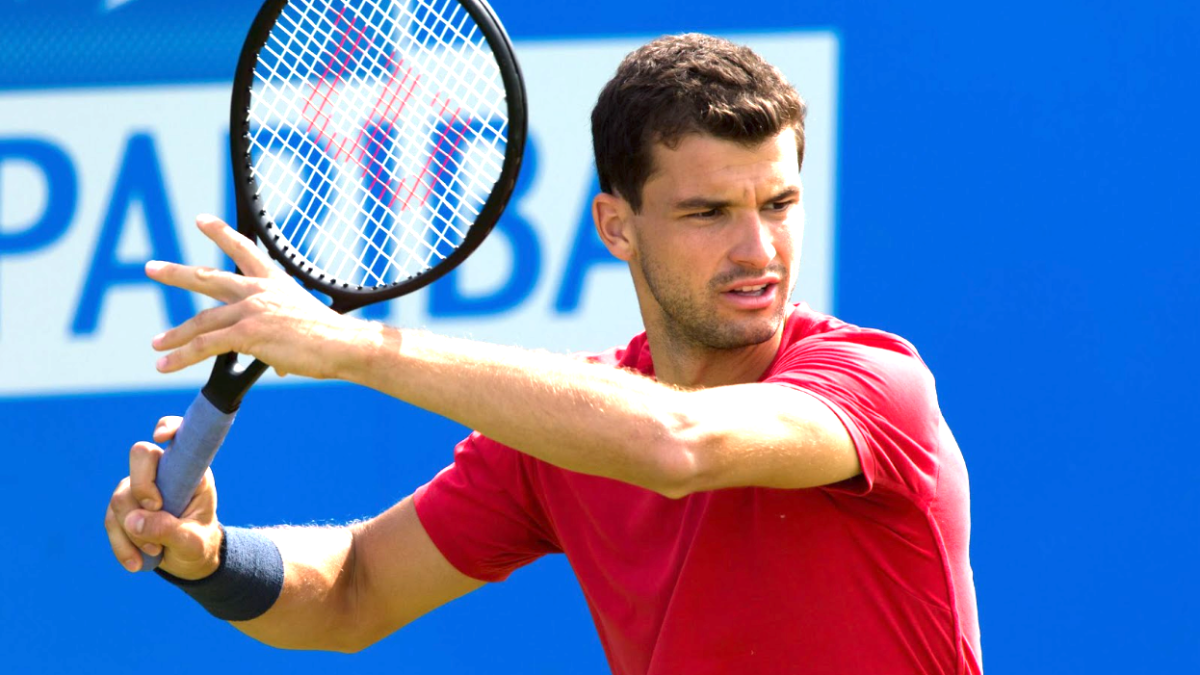
His signature weapon is the one-handed backhand, a shot that allows greater slice variation and tactical depth but requires excellent timing. This style is less common in modern men’s tennis, where two-handed backhands dominate.
He tends to win points through placement rather than power. Instead of forcing winners immediately, Dimitrov often extends rallies until he creates a narrow opening.
This approach makes him particularly effective on faster surfaces where clean ball striking is rewarded.
Observers often describe his matches as strategic rather than physical contests. While younger opponents may rely on explosive baseline shots, Dimitrov prefers controlling tempo through spin variation, court positioning, and selective aggression.

The ATP Finals is a prestigious season-ending tournament featuring the top eight-ranked players. Winning this event is often considered comparable to winning a master-level title because of the depth of competition.
During that season, Dimitrov briefly reached a career-high ranking inside the world's top three. That period represented the strongest sustained performance phase of his professional life.
Despite later fluctuations in consistency, the 2017 season remains the reference point for evaluating his potential ceiling.
In 2025, he suffered a serious pectoral muscle injury during competition at the Wimbledon Championships while facing world No. 1 Jannik Sinner.
The injury forced a match retirement despite Dimitrov holding a competitive position in the contest. Because of the timing and severity, the event affected both his ranking momentum and tournament schedule.
Rehabilitation focused on restoring upper-body stability, which is crucial for service motion and backhand control. For a player whose game depends on precision shot mechanics, maintaining muscular balance is especially important.
Entering 2026, his competitive objective is not necessarily a rapid ranking ascent but sustained participation across the tour calendar.
One major reference event is the Brisbane International, where Dimitrov showed signs of returning to match rhythm by advancing beyond the opening round stage.
Hard courts are considered favorable for his game because they support clean ball contact and predictable bounce behavior. Analysts are watching how his movement efficiency holds up under tournament intensity.
The next high-attention competition is the Indian Wells Masters.
The draw structure of this tournament often produces early high-profile matchups. Discussion surrounding potential encounters with Carlos Alcaraz reflects the generational transition occurring in men’s tennis.
On one side, he is respected for technical elegance and sportsmanship. On the other hand, critics occasionally point to periods of inconsistency in Grand Slam deep runs.
His career is often framed as that of a highly skilled player who faced difficulty sustaining peak performance across long competitive seasons.
Nevertheless, he remains popular among tennis fans who value style, shot variety, and intelligent court play.

The primary questions surrounding him are:
So Who Is Grigori Dimitrov?Dimitrov represents a style of professional tennis centered on technique, timing, and tactical awareness. His career has included a Grand Slam junior sweep, a prestigious ATP Finals championship, and periods of top-three ranking performance.
Since turning professional in 2008, he has built a reputation as a technically gifted player who relies on timing, court awareness, and tactical patience.
His style is sometimes compared to Roger Federer, although Dimitrov has developed a distinct career path shaped by his own strengths and challenges.
The story surrounding Dimitrov today is less about early career breakthroughs and more about endurance.
After dealing with injury setbacks in 2025, his focus has shifted toward recovery, consistency, and rebuilding competitive rhythm across the 2026 ATP season.
Early Background: Understanding Who He Is
Grigor Dimitrov is often introduced as one of the most technically refined players to emerge from Eastern Europe in the 21st century.Born in Bulgaria, he grew up training in a tennis environment that emphasized skill development and tactical awareness rather than raw physical dominance.
As a junior player, Dimitrov quickly gained international attention by winning major youth championships at the Wimbledon Championships and the US Open. These victories signaled his potential to transition into professional competition.
Dimitrov turned professional in 2008. Early in his career, analysts compared parts of his technique and movement style to legendary all-court players.
One frequently mentioned stylistic influence is Roger Federer, particularly in shot fluidity and backhand execution.
However, Dimitrov developed his own identity, blending defensive stability with sudden offensive acceleration during rallies.
Playing Style: What Defines His Tennis
Dimitrov is best known for an all-court game built on precision.His signature weapon is the one-handed backhand, a shot that allows greater slice variation and tactical depth but requires excellent timing. This style is less common in modern men’s tennis, where two-handed backhands dominate.
He tends to win points through placement rather than power. Instead of forcing winners immediately, Dimitrov often extends rallies until he creates a narrow opening.
This approach makes him particularly effective on faster surfaces where clean ball striking is rewarded.
Observers often describe his matches as strategic rather than physical contests. While younger opponents may rely on explosive baseline shots, Dimitrov prefers controlling tempo through spin variation, court positioning, and selective aggression.
Career Achievement: The Peak Competitive Moment
The defining championship of Dimitrov’s career came in 2017 when he captured the ATP Finals.The ATP Finals is a prestigious season-ending tournament featuring the top eight-ranked players. Winning this event is often considered comparable to winning a master-level title because of the depth of competition.
During that season, Dimitrov briefly reached a career-high ranking inside the world's top three. That period represented the strongest sustained performance phase of his professional life.
Despite later fluctuations in consistency, the 2017 season remains the reference point for evaluating his potential ceiling.
Injury Disruption and Physical Recovery
The most significant recent challenge in Dimitrov’s career has been injury.In 2025, he suffered a serious pectoral muscle injury during competition at the Wimbledon Championships while facing world No. 1 Jannik Sinner.
The injury forced a match retirement despite Dimitrov holding a competitive position in the contest. Because of the timing and severity, the event affected both his ranking momentum and tournament schedule.
Rehabilitation focused on restoring upper-body stability, which is crucial for service motion and backhand control. For a player whose game depends on precision shot mechanics, maintaining muscular balance is especially important.
Entering 2026, his competitive objective is not necessarily a rapid ranking ascent but sustained participation across the tour calendar.
Current Competition Outlook for the 2026 Season
Early 2026 tournaments are being used as performance calibration.One major reference event is the Brisbane International, where Dimitrov showed signs of returning to match rhythm by advancing beyond the opening round stage.
Hard courts are considered favorable for his game because they support clean ball contact and predictable bounce behavior. Analysts are watching how his movement efficiency holds up under tournament intensity.
The next high-attention competition is the Indian Wells Masters.
The draw structure of this tournament often produces early high-profile matchups. Discussion surrounding potential encounters with Carlos Alcaraz reflects the generational transition occurring in men’s tennis.
Public Image and Career Narrative
Media perception of Dimitrov is shaped by two contrasting themes.On one side, he is respected for technical elegance and sportsmanship. On the other hand, critics occasionally point to periods of inconsistency in Grand Slam deep runs.
His career is often framed as that of a highly skilled player who faced difficulty sustaining peak performance across long competitive seasons.
Nevertheless, he remains popular among tennis fans who value style, shot variety, and intelligent court play.
Why His 2026 Season Matters
At 34 years old, Dimitrov is entering the veteran phase of a professional tennis career, where longevity management becomes as important as ranking pursuit.The primary questions surrounding him are:
- Can he avoid major injury recurrence?
- Can tactical adjustments compensate for natural age-related physical decline?
- Can he still challenge top-tier opponents in Masters events?