18 December 2025
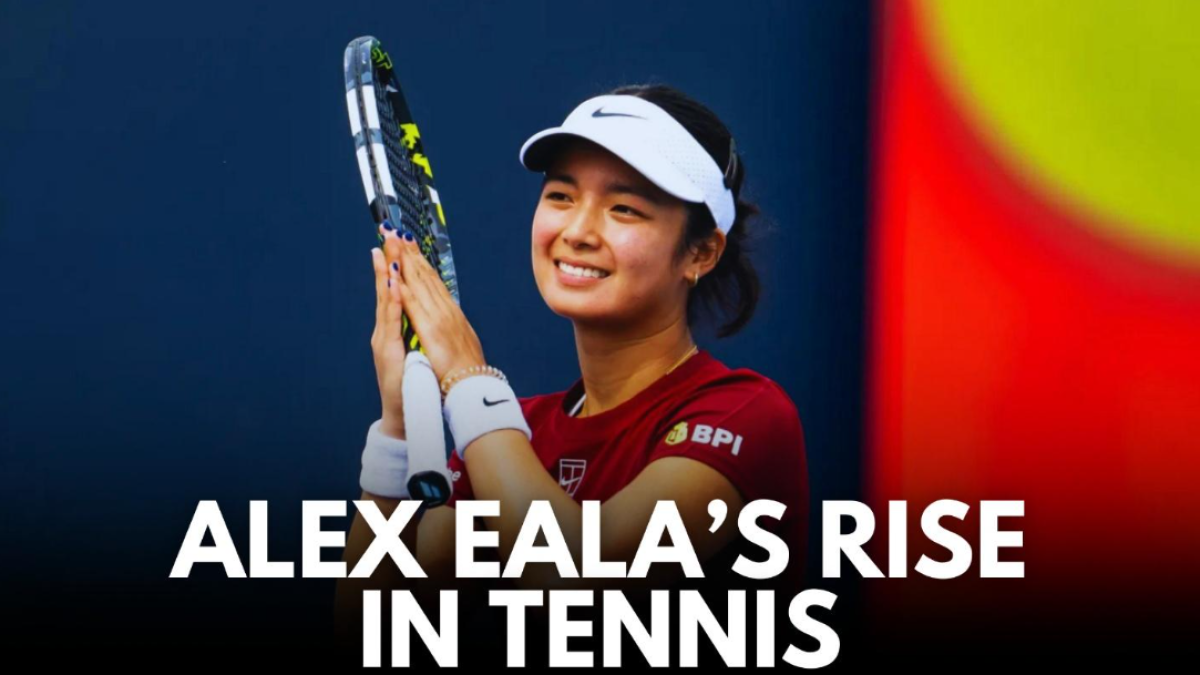
Alexandra “Alex” Eala’s trajectory over the past three years reads like a lesson in rapid professional maturation. The Filipino phenom who first announced herself on the junior stage has steadily translated junior successes into meaningful results on the WTA Tour—culminating in a career-high ranking inside the WTA Top 50 in 2025. That rise is more than a personal milestone: it signals the emergence of a Southeast Asian player capable of competing consistently at the tour level and rewriting expectations for tennis in the Philippines.
Meanwhile, if you want to explore how to play tongits go and other related games, check out GameZone.
Meanwhile, if you want to explore how to play tongits go and other related games, check out GameZone.
From junior Grand Slam winner to WTA contender
Eala first attracted global attention after winning notable junior titles and performing strongly in ITF juniors. Those early wins established her game—an aggressive baseline style, the ability to change pace, and mental resilience in moments of pressure. Transitioning from junior to professional tennis is rarely linear, but Eala combined targeted coaching, experience on the ITF/WTA challenger circuit, and training at elite academies to accelerate that development. Her ITF and early WTA results steadily improved her ranking and gave her the match-play foundation necessary for bigger stages.2025: the breakthrough year
The year 2025 stands out as Eala’s real breakthrough. A sequence of headline-making performances—most notably a deep run at the Miami Open where she reached the semifinals as a wildcard—vaulted her into the international spotlight. During that Miami run she defeated several major champions and top-ranked opponents en route to the semis, establishing her capacity to beat elite competition on hard courts. Shortly afterwards she continued to collect milestones: reaching finals at WTA events, winning a WTA 125 title, and achieving her first Grand Slam main-draw victory at the US Open. Those results fed directly into her ranking climb and broader recognition across tennis media.Where the ranking stands—and why it matters
As of late 2025, official WTA sources and major tennis bodies list Alex Eala inside the Top 50 (career-high No. 50), a remarkable ascent from outside the Top 100 at the start of the season. This current ranking is significant for several reasons:- Direct entry to tour-level events and Slams. Breaking into the top 100 and then top 50 reduces reliance on wildcards or qualifying rounds, letting her plan seasons with main-draw access to bigger tournaments where ranking points and prize money scale quickly.
- Seed protection and draw advantages. Higher ranking increases the likelihood of more favorable early-round draws and, over time, protected seedings at certain events—both critical for consistent point accumulation.
- National and regional impact. Being the highest-ranked Filipino in WTA history (and one of the few Southeast Asian players to reach this tier in modern times) increases visibility for the sport in the Philippines and can attract sponsorship, development funding, and inspire a generation of players.
How results translated to ranking points
Eala’s ranking jump was not the product of a single upset alone but of a pattern of results across surfaces: deep runs at WTA 1000-level events, reaching a WTA final on grass, collecting a WTA 125 title, and earning Grand Slam match wins. The WTA ranking system rewards consistency as well as marquee wins; a run to the semifinals of a WTA 1000 (Miami) and a title at a WTA 125 event accumulate substantial points and accelerate momentum. In practical terms, a sequence of solid performances at high-value tournaments drove the move from the 140s into the Top 75 and ultimately into the Top 50.Strengths, areas to watch, and playing style
Eala’s strengths are recognizable: a confident baseline game, variety in spin and pace, and a growing tactical maturity for closing out tight matches. Her ability to serve well under pressure and construct points with a mix of depth and short angles has helped against higher-ranked opponents. Areas for development—common for young tour players—include maintaining physical consistency across long tournaments, minimizing unforced errors in tight matches, and expanding her tactical options on slower clay courts. If she continues to refine these areas, her ranking trajectory could continue upward.The broader significance: inspiration and infrastructure
Eala’s rise carries symbolic and practical significance for Philippine tennis. On a symbolic level, she has become a national figure who demonstrates that players from countries with less historical presence on the WTA Tour can reach Top 50 status. Practically, her success can incentivize federations, private academies, and sponsors to invest more in coaching, courts, and junior pathways—creating a virtuous cycle that produces more competitive players long-term. Local media coverage and social engagement around her Miami and US Open achievements also show how one player’s breakthroughs can spark broader interest.What to expect next (based on rankings and form)
Given that rankings reflect both current form and recent point accumulation, Eala’s Top 50 position sets a new baseline. The next season’s priorities for her team are likely to be:- Targeted scheduling at a mix of WTA 1000, 500, 250, and selected WTA 125 events to defend and build ranking points.
- Physical periodization to ensure she can peak for key tournaments and manage injury risk during long runs.
- Surface balance — continuing to translate hard-court results to grass and clay so she is competitive at all majors.
If she sustains or improves on the performance levels that produced Top 50 status—particularly by stringing together match wins at Grand Slams and higher-tier events—a move into the Top 30 over the next 12–18 months would be a realistic goal.